After a day in ski boots, pulling on a warm pair of après boots is one of the best feelings on the mountain. A good pair carries you from the car park to the lifts, through the village and out to dinner, and it needs to stay warm and grip on ice the whole way.
This guide explains what makes a good après snow boot, how our two brands compare, and how to get the right fit.
What are après snow boots?
Après boots are winter boots for everything you do off the slopes. You wear them for the walk to the lifts, for lunch and drinks in the village, and for travel days to and from the snow. They are built for real alpine conditions, with proper insulation and soles that grip on snow and ice, but they look good enough to wear into a restaurant.
They are different from a fashion boot or a hiking boot. A fashion boot rarely has the insulation or grip for an icy village street, and a hiking boot is built for walking long distances rather than standing around in the cold.
What to look for
Warmth
Look for a boot with a temperature rating, not just a fluffy lining. Every boot in our range is rated to –30°C, which is well beyond anything you will face on a typical day at Australian and New Zealand resorts.
Grip on ice
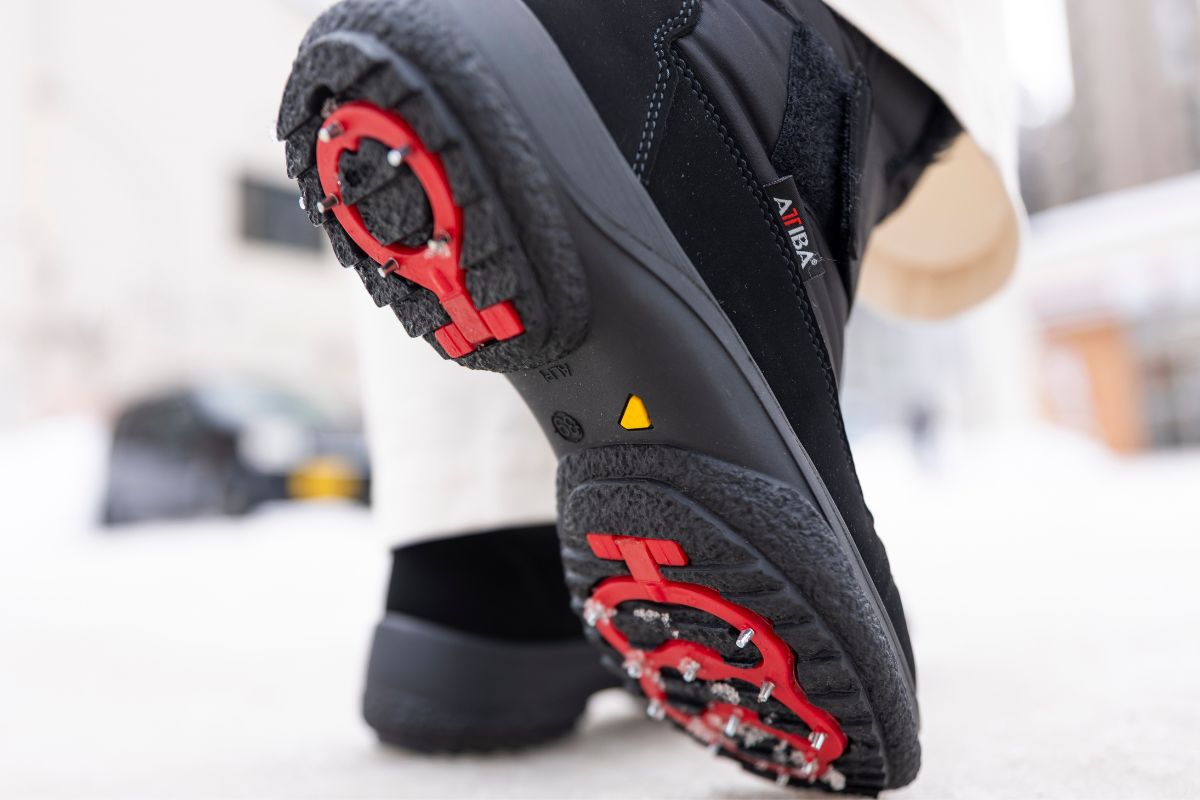
Icy car parks and village paths are where most slips happen. All of our boots use the OC Rotor Sole™, which has retractable ice spikes. You flip the spikes out for snow and ice, then tuck them away so they won't scratch indoor floors.
Easy on and off
You will take your après boots on and off many times a day, often with cold hands. A side or front zip makes this much easier, especially with a lace-up boot.
Keeping snow out
Think about where you will wear them. If you expect slush and wet snow, a waterproof outer is worth having. If you mostly walk on cold, dry snow, a windproof and snowproof boot will do the job.
Attiba or Navatex?
We stock two après boot brands. They differ in three main ways: where they are made, how their spikes grip on ice and how they fit.
Attiba: made in Italy, narrow to normal fit
Attiba boots are made in Italy, with premium European construction and materials. That craftsmanship is the main reason they sit at a higher price than Navatex.
Attiba boots have retractable spikes in both the toe and the heel, so you have grip on ice at the front and back of your foot. The included key flips the spikes between two positions in seconds. Inside, a windproof, snowproof insulated liner keeps your feet warm, and a durable rubber outsole adds stability.
Attiba boots suit a narrow to normal foot.
The women's range covers several styles, so you can choose the closure that suits you. The Venice laces up and has a side zip, and comes in Black Fur or Grey Fur. The Cortina has a front zip, and the Roma closes with a Velcro strap. For a dressier look, the Florence has a premium suede outer and a side zip. The Como is a classic lace-up. For men, the Eiger 2 laces up and has a side zip for easy on and off.
Navatex: designed in Canada, normal to wide fit
Navatex boots are designed in Canada and offer great value. They have a durable, waterproof PU-Nubuck outer, 200 g insulation and a Berber fleece lining, plus a removable memory foam insole.
Navatex boots have a single retractable spike in the heel, which retracts flush with the sole so it won't scratch indoor floors. A grip key stores in its own pocket.
Navatex boots suit a normal to wide foot.
Both Navatex styles are unisex. The Windsor has a YKK® side zip for quick on and off. The Thomas adds laces, so you can fine-tune the fit, along with the same side zip.
Which should you choose?
Choose Attiba if you want Italian-made boots with grip at the toe and heel, and you have a narrow or average foot. The range also gives you the most styles and closures to choose from.
Choose Navatex if you have a wider foot, or you want a waterproof boot at a lower price. It is a great option for wet spring snow and slushy car parks.
Getting the right size
Both brands fit true to size, but how you handle half sizes differs.
With Attiba, size up if you are between sizes or plan to wear thick socks. With Navatex, size down if you are between sizes, because the boot is already roomy.
Try boots on in the afternoon if you can, when your feet are at their largest, and wear the kind of sock you will wear at the snow. Your toes should have room to wiggle. A boot that squeezes your foot will feel colder, because it restricts circulation.
If the size isn't right, we offer easy exchanges on unworn items returned within 14 days of delivery.
Keeping your feet warm in après boots
Après boots work best with a good sock. Cotton holds moisture against your skin, so choose a merino sock instead. Merino stays warm even when your feet sweat.
If your feet are still damp from your ski boots, change into a dry pair of socks before you put your après boots on. Dry feet stay warm much longer than damp ones.
Find your pair
Browse the full range of women's après boots and men's après boots. If you are unsure about size or fit, get in touch and we will help you choose.
Share:
How to choose heated ski socks
How to layer heated clothing for skiing